

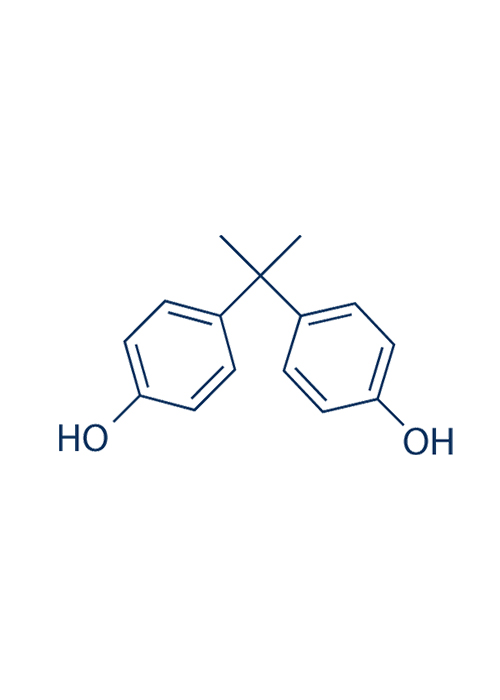
CAS Number:80‑05‑7
Synonyms:2,2-bis(4‑hydroxyphenyl)propane; BPA; Parabis
Chemical Formula:C₁₅H₁₆O₂
Molecular Weight:228.29 g/mol
Product Introduction
A white solid—flakes or crystalline—with a mild phenolic odor. BPA is primarily used as a monomer in the production of polycarbonate plastics (≈65–70%), epoxy and vinyl ester resins (25–30%), and as a component in thermal paper receipts and dental sealants. Concerns over its endocrine-disrupting effects and links to health issues have prompted regulatory scrutiny .
| Property | Value |
|---|---|
| Appearance | White crystalline flakes/powder; mild phenolic odor |
| Density @ 25 °C | ~1.20–1.22 g/cm³ |
| Melting Point | ~155–158 °C |
| Boiling Point | ~250–360 °C (decomposes) |
| Solubility | Slight in water (~0.12–0.3 g/L); soluble in organics (acetone, toluene, etc.) |
| Log P | ~3.41 |
| Vapor Pressure @25 °C | Negligible |
| Flash Point | ~227 °C |
| Autoignition Temp | ~510 °C |


Daivat Lifesciences Pvt. Ltd. A-301, Kailash Tower, Behind STC Society N.S. Phadke Marg, Andheri (East), Mumbai - 400069, India
B-1701, Lotus Corporate Park Off Western Express Highway Near Jai Coach Signal, Goregaon (East)
Copyright © 2026 All Rights Reserved By Daivat Lifesciences | Design and Developed By Arsh Infosystems
